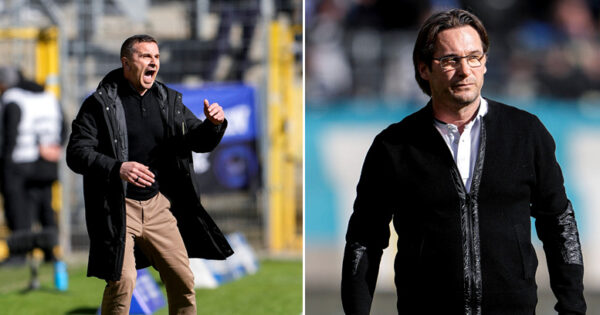
The Unforeseen Challenges: When a Coach Like Selimbegovic Misses a Game
In the high-stakes world of professional football, the presence of the head coach on the sideline is often considered paramount. They are the tactical masterminds, the emotional anchors, and the instant decision-makers. So, when "selimbegovic fehlt spiel" – when Mersad Selimbegovic, or any coach for that matter, misses a game – it sends ripples through the team, the fans, and the media. A coach's absence, whether due to illness, suspension, or other unforeseen circumstances, can significantly impact a team's preparation, morale, and performance. This article delves into the specific instances where Selimbegovic has been unable to lead his team from the touchline, exploring the reasons behind these absences and their broader implications for football management.
Football is an intense sport, demanding constant strategic adjustments, motivational boosts, and unwavering leadership. The coach embodies this leadership, guiding the team through thick and thin. Their physical presence at a game allows for real-time tactical changes, direct communication with players, and an immediate feel for the match's ebb and flow. Thus, any deviation from this norm, such as a coach being sidelined, immediately creates a vacuum that even the most prepared coaching staff can struggle to fill entirely.
Battling Bugs and Benchings: Selimbegovic's Medical Absences
Mersad Selimbegovic, like many in demanding professions, has faced health challenges that have regrettably kept him away from the dugout. These are perhaps the most understandable, yet often the most disruptive, forms of absence, as they are entirely beyond a coach's control.
One notable instance occurred during his tenure at SSV Jahn Regensburg. Assistant coach Sebastian Dreier stepped in for a press conference, revealing that Selimbegovic was battling a severe case of the flu. "Mersad ist krank und liegt mit einer Grippe im Bett, deshalb kann er leider nicht kommen," Dreier reported, expressing the team's hope for a swift recovery. This flu bout meant Selimbegovic was likely to miss a crucial 2. Bundesliga match against promotion candidates Hamburger SV. The temporary void left by a coach who "pulls the ship" and is "figuratively speaking our captain," as Dreier put it, highlights the profound impact of their leadership.
This wasn't Selimbegovic's first encounter with an illness-related absence. In February 2021, while still at the helm of Jahn Regensburg, he tested positive for COVID-19. This forced him to miss the second-division clash against SC Paderborn, a game which Regensburg commendably won 1-0 in his absence. The COVID-19 pandemic introduced a new layer of complexity to sports management, with coaches, players, and staff regularly testing positive and requiring isolation. Such situations underscore the critical need for robust support systems within a coaching team, where assistants are fully prepared to take the reins at a moment's notice.
The Impact of Illness on Team Dynamics
The absence of a head coach due to illness presents several challenges:
- Tactical Adjustments: While game plans are prepared in advance, a coach's ability to make on-the-fly tactical shifts is invaluable. An assistant must assume this role, often without the direct authority or experience of the head coach.
- Player Morale: Players often draw confidence and motivation from their leader's presence. An absent coach, especially for health reasons, can create a sense of unease or concern within the squad.
- Communication Gaps: Even with modern technology, direct communication from the touchline during a live game is irreplaceable. Relay instructions through assistants can lose nuance or speed.
Clubs mitigate these risks by fostering a cohesive coaching unit, where responsibilities are clearly delineated, and assistants are empowered to step up. Regular health monitoring and adherence to protocols, especially post-pandemic, are also crucial for ensuring the continuity of leadership.
The Red Card Verdict: Selimbegovic's Sideline Suspension
Beyond medical reasons, disciplinary actions can also lead to a coach's absence. In a sport fueled by passion and high emotions, touchline incidents are not uncommon, and even coaches can find themselves in hot water. Mersad Selimbegovic experienced this firsthand, resulting in a DFB Sportgericht (German Football Association Sports Court) ban and fine.
The incident unfolded during a heated match between Alemannia Aachen, then coached by Selimbegovic, and Mannheim. Following a foul by Aachen's Petros Bagkalianis on Arianit Ferati just before halftime, a chaotic scuffle erupted involving players and officials from both sides. Selimbegovic and Mannheim's sporting director, Gerhard Zuber, became entangled in the melee. According to DFB referee spokesman Alexander Feuerherdt, both individuals behaved "in konfrontativer und aggressiver Art und Weise" (in a confrontational and aggressive manner). Despite both Selimbegovic and Zuber claiming they were merely trying to de-escalate the situation and pull their players away, they were shown red cards in the catacombs during the interval.
The consequence for Selimbegovic was a one-game indoor ban and a financial penalty. This meant he was barred from the interior areas of the stadium, including the dugout, changing rooms, and tunnel, for the subsequent match.
Navigating a Suspension: Challenges and Strategies
A suspension differs from an illness in its nature and implications:
- Loss of Direct Influence: Unlike illness where remote communication might be possible (depending on rules), a touchline ban is designed to completely remove the coach's direct influence from the match environment.
- Reputational Impact: While understandable in the heat of the moment, a red card for a coach can carry a slight reputational stain, emphasizing the need for professional conduct.
- Pre-Game Planning: The coaching staff must meticulously plan for the game knowing the head coach won't be physically present. This involves exhaustive tactical discussions, set-piece preparations, and anticipating potential in-game scenarios.
- Empowering Assistants: The assistant coach takes full charge, needing to demonstrate strong leadership, decisive tactical acumen, and the ability to inspire the team without the head coach's immediate presence.
Such incidents serve as a stark reminder of the immense pressure and scrutiny faced by coaches, where maintaining composure under provocative circumstances is paramount for both personal conduct and team stability. For more detailed insights into various reasons a coach might be absent, you can explore topics like
Trainer Selimbegovic: Illness, Red Cards, and Missing Games.
Beyond the Sidelines: The Ripple Effect of a Coach's Absence
When "selimbegovic fehlt spiel," or any coach is absent, the repercussions extend far beyond just who stands on the touchline. It affects the entire ecosystem of a football club. The dynamic role of a coach in modern football cannot be overstated; they are strategists, motivators, media spokespersons, and often the face of the club.
Consider the immense pressure Selimbegovic faced in his debut as Hansa Rostock's trainer, where a 0:3 defeat to Nürnberg pushed the team into the relegation zone. He remarked, "If you lose 0:3, it's difficult to talk about positive things." While he was present for this game, this instance powerfully illustrates the high-pressure environment that coaches operate in daily. When a coach is then *absent*, whether due to illness or suspension, this pressure is not diminished; it merely shifts, often onto the shoulders of the assistant coaches and the players themselves.
Impact on Team Psychology and Performance
A coach's absence can significantly influence team psychology:
- Uncertainty: Players thrive on consistency. An unexpected absence can create a degree of uncertainty or disruption in routines.
- Motivation: The pre-game team talk, the encouraging words from the touchline, and the post-match debrief are crucial for motivation. While assistants can step up, the unique bond between a head coach and their players is hard to replicate instantly.
- Strategic Fluidity: Despite thorough preparation, games rarely go exactly as planned. The head coach’s nuanced understanding of opponent weaknesses and real-time tactical adjustments often proves decisive.
For clubs navigating difficult periods, such as Hansa Rostock's struggle for form, as detailed in
Hansa Rostock's Struggle: Selimbegovic Faces Debut Challenge, the presence of their leader is even more critical. Selimbegovic's message after the Nürnberg loss, that "the season is a marathon, you must be ready to pull through with everything you have," underscores the relentless demands of the sport. His absence, for whatever reason, means that another individual must carry that torch, maintaining the same level of intensity, dedication, and strategic foresight.
Preparing for the Inevitable: Best Practices for Clubs
Clubs can implement strategies to minimize the impact of a coach's absence:
- Empowering the Assistant Coaching Staff: This is paramount. Assistant coaches should be deeply involved in all aspects of team preparation and decision-making, ensuring a seamless transition of leadership if the head coach is unavailable.
- Clear Communication Channels: Establishing protocols for communication during absences, especially if the coach is isolating, can help maintain some level of strategic input (within league rules).
- Player Leadership: Encouraging strong player leadership on the field can compensate for the absence of a touchline voice. Experienced captains and vice-captains become even more vital.
- Contingency Planning: Having a pre-defined plan for various scenarios of coach absence, including media duties, training sessions, and matchday responsibilities, is essential.
Conclusion
Mersad Selimbegovic's past game absences, stemming from both unexpected illness and disciplinary action, serve as compelling case studies in the unpredictable nature of football management. Each instance where "selimbegovic fehlt spiel" highlighted not only the individual challenges he faced but also the broader implications for team performance, coaching staff dynamics, and club preparedness. In an environment where every game is a battle, the consistent presence of the head coach is a vital component of success. Clubs and coaching teams must therefore be agile, resilient, and well-prepared to navigate these inevitable disruptions, ensuring that the ship, as Selimbegovic's assistant so aptly put it, continues to sail forward, even when its captain is temporarily off deck.